Case Study: How Boss Dog Used Custom Illustration to Win 5000+ Retail Doors
Dyno Creative on Branding and Illustration | March 4, 2026
Walk down any pet store aisle and you’ll notice something: most brands look exactly the same.
Happy dog. Bowl of food. Maybe a farm in the background. It’s a sea of photography that all blurs together. And that’s exactly the problem.
Then there’s Boss Dog.
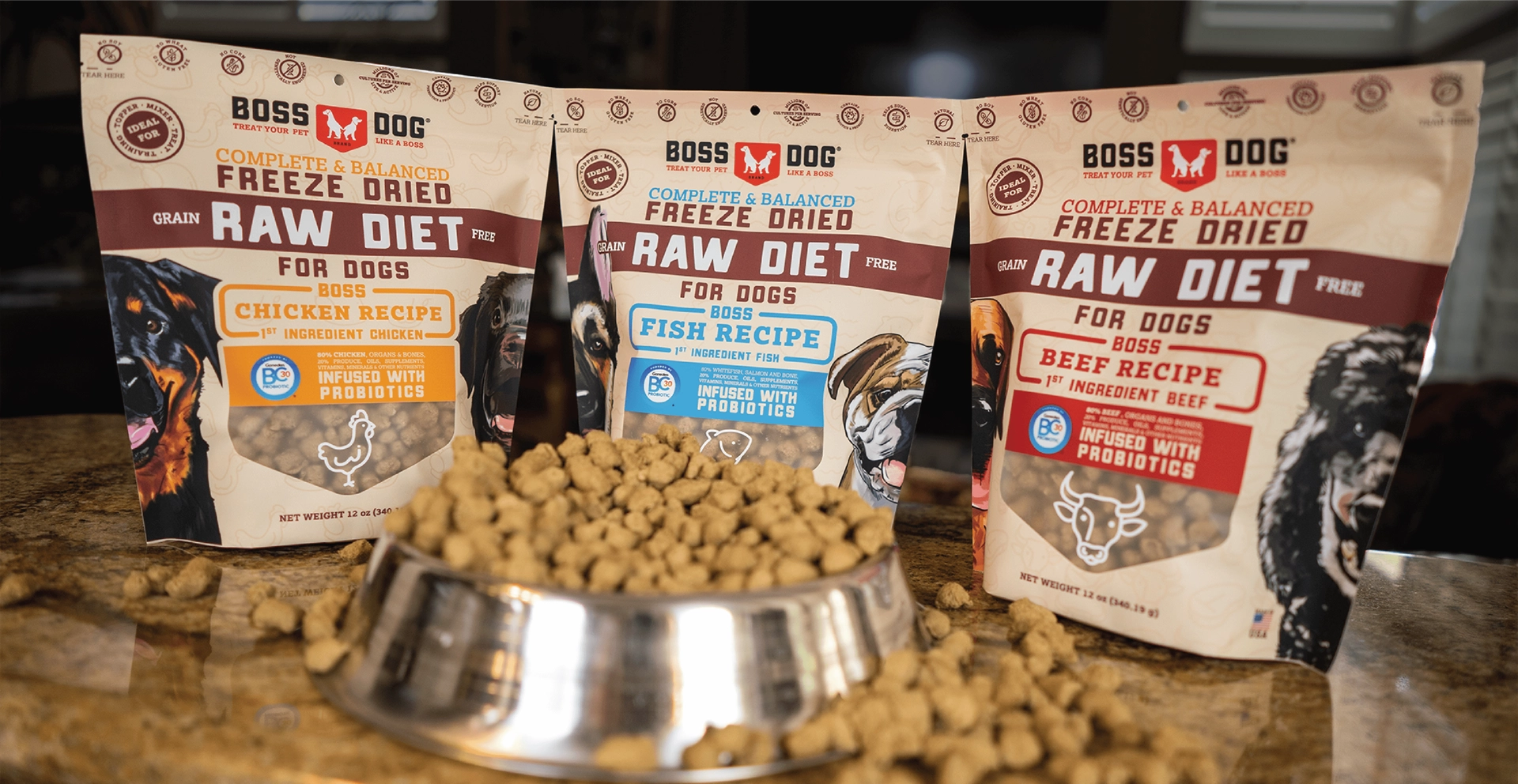
Their packaging stops you mid-stride. Bold illustrations. Playful characters. A color system that makes sense the moment you see it. You remember them. And in a category where [shelf presence determines everything](link to Blog 3: How Illustration-Led Branding Helps Pet Brands Stand Out), being remembered is the whole game.
Boss Dog went from 10 retail doors to over 5,000 stores across the U.S. and Canada. They scaled from a single product into a multi-million dollar portfolio spanning 10+ SKUs for both dogs and cats.
This is the story of how they did it, and why choosing illustration over photography was the strategic decision that made it all possible.
It Started With a Founder Who'd Done This Before
Boss Nation Brands wasn’t built by accident. And it wasn’t built by a first-timer.
Basel “Vasili” Nassar, CEO and Founder, came to pet wellness after co-founding a Greek yogurt company that achieved hundreds of millions in retail sales. He understood what it takes to win shelf space in crowded categories: the buyer psychology, the velocity demands, the unforgiving three-second window where packaging either works or doesn’t.
But Boss Nation wasn’t just another business opportunity. For Vasili, it was personal.
“Pets are family, and their wellness matters.”
That belief shaped everything. Boss Dog’s products aren’t just treats. They’re designed around pet gut health, probiotics, and science-backed wellness ingredients. In industry interviews and podcasts, Vasili has consistently emphasized digestive wellness as the brand’s core differentiator, tying product innovation back to meaningful health outcomes for pets.
This mission-driven foundation meant the brand couldn’t look like everyone else. The packaging had to communicate that wellness focus: clearly, instantly, at shelf level. And it had to do it in a category where every competitor was using the same visual playbook.
The Problem: Everyone's Using the Same Playbook
When Boss Dog came to us, the challenge was clear: the pet category is crowded, and photography-focused packaging dominates.
Brands compete with nearly identical images: a golden retriever mid-bite, a cat pouncing at a treat, maybe some kibble artfully arranged. It’s familiar. It’s safe.
It’s also forgettable.
Boss Dog needed to break that pattern while accomplishing three things at once:
1. Stand out on crowded shelves where buyers make decisions in seconds
2. Communicate health benefits without looking clinical or boring
3. Support a premium wellness positioning that signaled "this is different"
And critically, whatever we built had to grow with them. Not just one product, but an entire brand that could expand into new categories, new SKUs, even new species (Boss Cat was already on the roadmap) without losing coherence or diluting the message.
The question wasn’t “how do we make this look nice?” It was “how do we build a visual system that compounds over time?”
The Strategic Decision: Why Illustration Changes Everything
Here’s something most pet brands don’t realize: photography is a commodity.
Any brand can hire a photographer. Any brand can shoot a happy dog enjoying a treat. The images might be beautiful, but they’re not ownable. Your competitor can create something nearly identical tomorrow. In pet, they probably already have.
Illustration changes the equation entirely.
When you build a brand around custom illustration, you create a visual language that belongs only to you. No one else can replicate your style. No one else owns your characters. The visual equity you build compounds over time. Every new product reinforces recognition instead of starting from zero.
For Boss Dog, the choice was strategic, not aesthetic. People would see a photo of a strawberry on the package and expect it to taste exactly like that. Illustration helped set expectations better.
Photography creates literal expectations. Illustration creates emotional ones. And emotional connection is what turns first-time buyers into repeat customers.
Building the Brand: From Logo to Language
With the strategic direction set, we moved into execution. The goal: build a complete visual system that could flex across products, channels, and years of growth.
The Logo
We explored multiple directions: illustrative mascot styles similar to sports branding, modular approaches, playful character-driven marks. The winner? A badge reminiscent of a dog’s nose.
It’s clever without being gimmicky. It works at any size, from packaging to social icons. And most importantly, it “encompasses furry friends of all sizes”—making every pet parent feel like Boss Dog was made for their dog, whether that’s a chihuahua or a Great Dane.
The Illustration System
We developed handcrafted illustrations with a specific goal: create playfulness that allows consumers to see their own pet in these products.
The illustrations capture the emotional quality between owner and pet: that moment of connection when your dog looks up at you, waiting for a treat. Not just the product, but the feeling around it.
This approach let Boss Dog stand out “amidst a sea of photography-focused brands” while translating smoothly across print, web, social, and retail displays. One visual language. Infinite applications.
The System: Built to Grow With the Brand
A beautiful brand that can’t grow with you is just expensive decoration. Boss Dog needed a foundation: a system that could expand from a handful of products to an entire portfolio without losing coherence.
Here’s what we built:
Visual hierarchy that never changes. Every Boss Dog product follows the same structure: product name (instant recognition), key benefits (the “why buy”), and the pets who’ll enjoy it (emotional hook). New SKUs plug into the template. No reinventing the wheel.
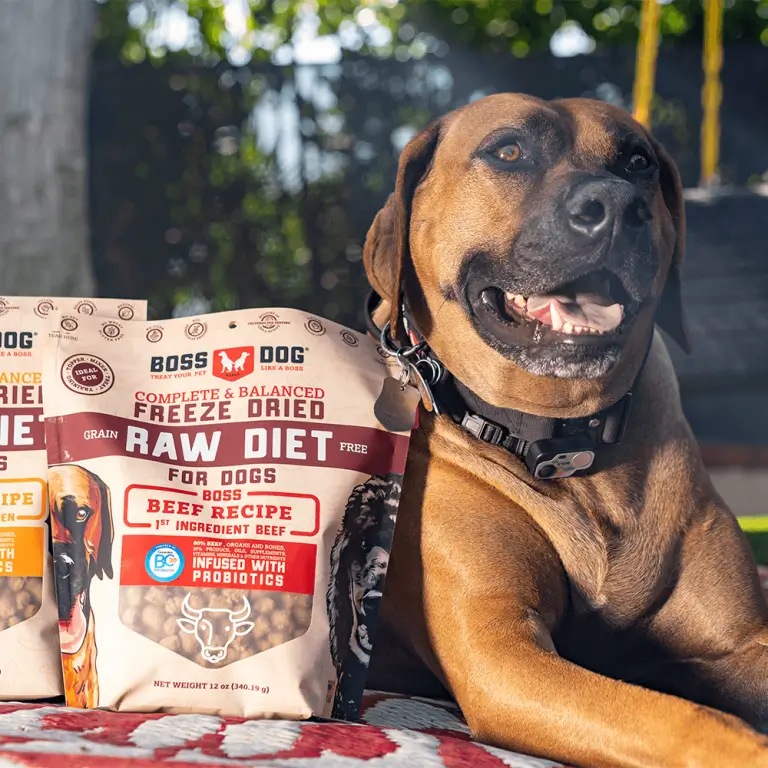
Color-coding that actually works. Colors identify flavor and product type simultaneously. Strawberry, chicken, beef: you know instantly what’s inside. Treats versus food versus supplements: the system makes navigation intuitive. Subtle background patterns reinforce these cues, creating visual shorthand shoppers learn quickly.
A custom icon library. We designed icons used across all product lines to call out nutrition benefits and key features. That consistent visual vocabulary builds recognition over time.
The result? When shoppers see a Boss Dog product, even from 10 feet away, they immediately know it’s Boss Dog. That’s the 3-second shelf test in action.
The Results: 10 Stores to 5,000+
The numbers tell the story:
10 stores → 5,000+ retail doors across the U.S. and Canada
Multi-million dollar brand built on a cohesive visual foundation
10+ product lines launched using the same scalable system
Boss Cat brand successfully added under the Boss Nation Brands umbrella
But the numbers only tell part of the story. What they don’t show is speed.
Because the system was built to expand, Boss Dog can launch new products fast. No months-long redesigns. No brand drift. The guidelines are clear, the templates are proven, and the illustration library keeps growing. Every new SKU reinforces the brand instead of diluting it.
Since launch, Boss Dog Brand has rapidly expanded into:
Functional gut health products
Frozen yogurt-style treats and raw blends
Probiotic-focused formulations
Tactical pet gear and lifestyle hard goods
Strategic partnerships with national distributors like Phillips Pet Food & Supplies and ADMC accelerated reach while allowing the team to focus on product innovation.
What This Means for Your Brand
Boss Dog’s story isn’t about “prettier packaging.” It’s about strategic differentiation: creating something competitors can’t copy, building a system that grows with you, and investing in a visual identity that compounds over time.
If you’re a pet brand founder wondering whether professional branding is worth the investment, consider this:
Photography-based brands compete on the same playing field. Every competitor can create similar imagery tomorrow. Illustration lets you own your own visual territory.
One-off design projects create assets. Brand systems create the foundation for growth. The difference shows up every time you launch a new SKU.
The brands that win retail aren’t always the best products. They’re the ones that look like they belong on the shelf, and stand out while doing it.
Boss Dog didn’t just get a rebrand. They got a foundation that turned 10 doors into 5,000.
Ready to Build a Brand System That Scales?
If your pet brand is ready to move from DIY to shelf-ready, we should talk.
Our Pet Brand Readiness Package is designed for growth-stage pet brands ($1M-$5M revenue) ready to expand into retail. Strategy. Identity. Packaging systems. Everything Boss Dog got, built for your brand.