Dyno Creative Horizontal Logo Mark Dark Rgb

Fandom Without a Franchise

Most brands rent fandom from someone else’s IP. Here’s how to build your own from scratch with three things you can actually design: belonging, a token, and ritual.

Fandom Without A Franchise Header

The Two Poles of One Show Floor

I walked the Licensing Expo floor this year with one question in my head. Where does fandom actually come from?

The show hands you the easy answer everywhere you look. On opening day, Licensing International announced that the global licensing market reached $389.8 billion in 2025 retail sales, up 5.45 percent year over year. The room was the proof. More than 410 exhibitors, over 12,500 people, and buyers from Walmart, Target, and Hot Topic walking aisle after aisle of characters everyone already loves. The expo even markets itself on “the power of fandom” and a “sense of identity and belonging.” The whole machine runs on it.

But here’s the thing almost nobody says out loud. Most of that $389.8 billion is rented. It’s built on fandom that already exists, attached to franchises someone else made famous. That’s a real and excellent business. We do it too, and I’ll get to that.

The brands that stopped me, though, were the ones who built their fandom from nothing.

80b7b629 b75e 471a 9678 8a0c5e5e624e 1 105 c

The Moment You Cannot Fake

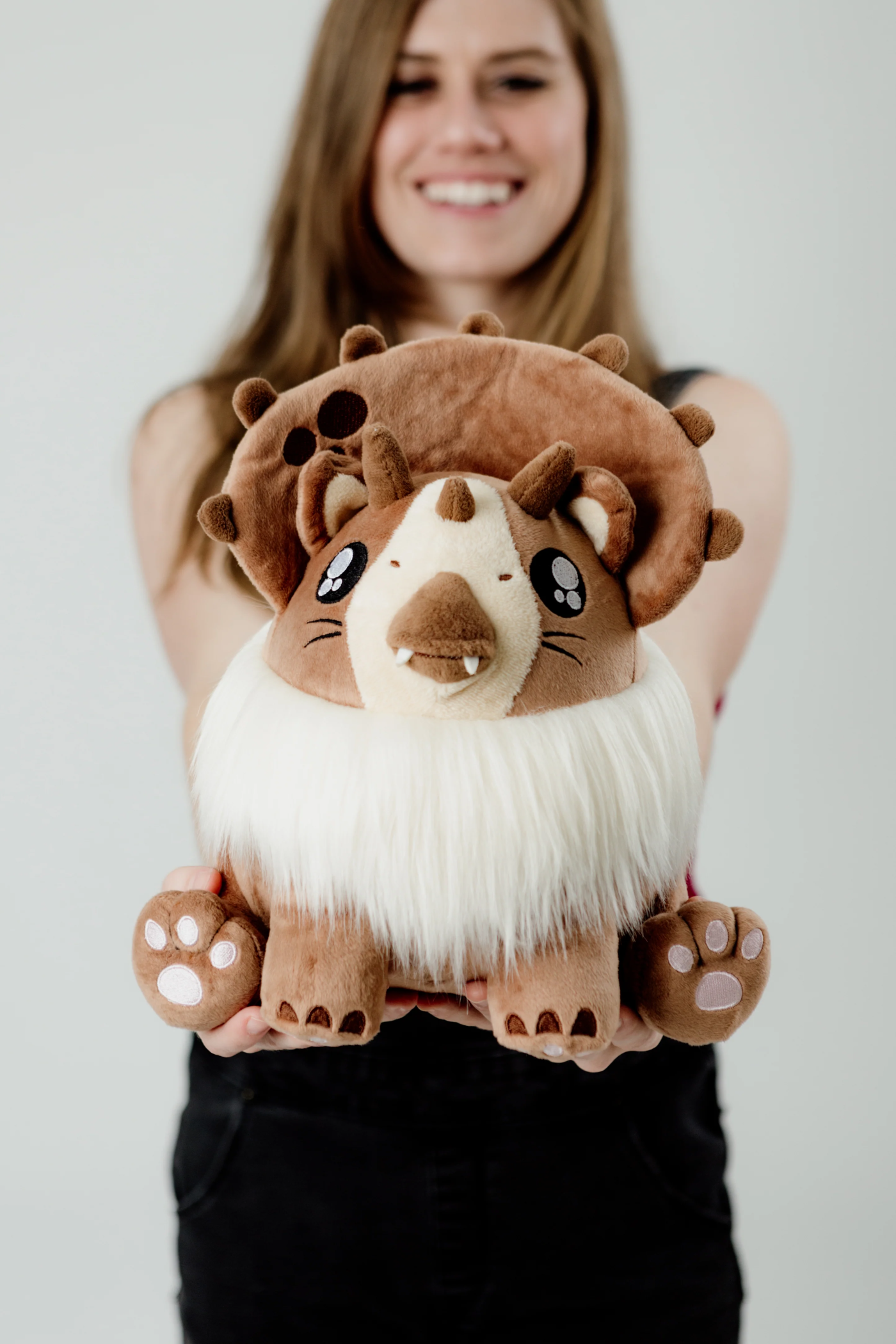
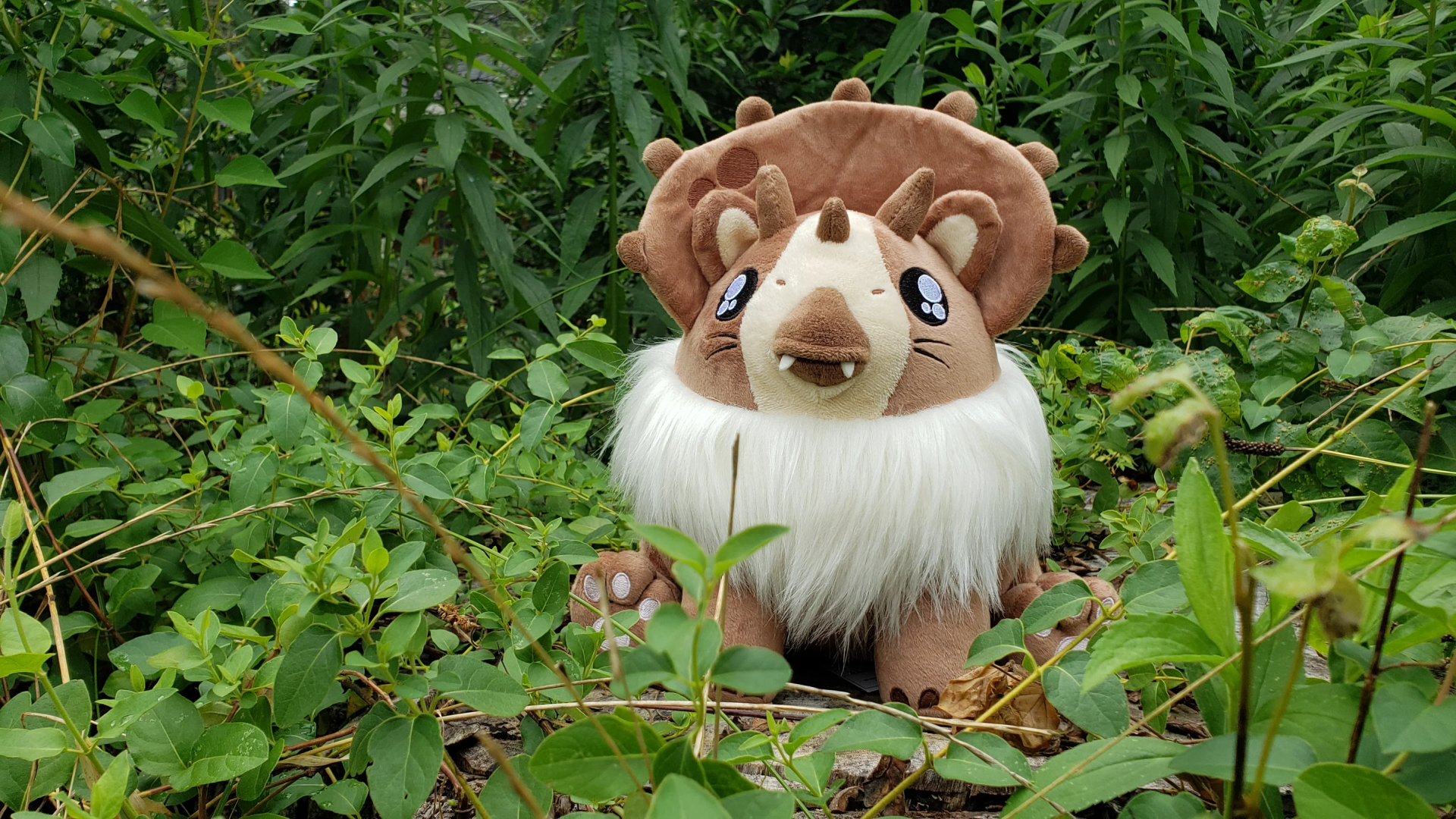
At the Lightfold and Meg’s Mashables space, a man with a kind smile and real joyous energy waved me over. He didn’t lead with a title or a business card. He led with the characters. He picked up a plush called Tricatatops, a dinosaur mashup with no movie, no show, and no license behind it, and he brought it to life. First in “normal mode.” Then, grinning, in “speed mode.” I didn’t find out until later that he was Forrester Kane, who runs Lightfold. In the moment, the story came first and the org chart never came up.

There was no IP doing the work. No nostalgia carrying the moment. Just a character, a creator who clearly adored it, and a small crowd that adored it back within about ten seconds. (I run a studio named after a dinosaur. A dino plush stopping me in my tracks was probably always going to happen.)

A few feet away was Meg, the artist behind it all, wearing dinosaur overalls. When I asked the team how they think about their audience, the answer was not a marketing line. They told me their fans are the core reason they do any of this, and that those fans carry the same love and passion for the work that they do. You could feel that it was true.

That’s the spark. And here’s the uncomfortable, freeing truth about it: you can’t manufacture it. Anything fakeable is, by definition, not authentic. Forrester didn’t invent the love people have for Tricatatops. He gave it a stage.

Which brings me to the reframe this whole post is built on.

Building a fandom without a franchise does not mean building one without effort.

You do not need to rent someone else’s IP to build a real fandom. You need an authentic creative core, plus three things you can actually design.

a0965d5a 85c8 4c67 95a9 5274a4968ee5 1 105 c

The Three Mechanics You Can Design

You can’t design authenticity. But you can design the conditions that let an authentic core become visible, shareable, and repeatable. There are three, and the best brands run all of them.

1.Belonging

People don’t join a product. They join a group. The move is simple to name and hard to fake: name your people, and give them a door.

Meg’s Mashables doesn’t have customers. It has Mashies. There is a Mashie Club and a members-only Secret Shop, so being a fan means being inside something. Critical Role, the tabletop crew led by dungeon master Matthew Mercer, did the same thing years ago. Their fans are Critters, and “is it Thursday yet?” became a shared language. The product was a Dungeons and Dragons stream. The thing people joined was each other.

2. A Token They Can Carry

Give people a small object or phrase they can carry that says who they are. This is the part founders underrate the most. Identity wants to be portable.

For Meg’s Mashables, the entire catalog is the token. Pins, stickers, and plushies are carryable identity you display on a bag or a desk. For Critical Role, the tokens are weightless: catchphrases, inside jokes, and lore that travel in how fans talk to each other. Either way, the fan becomes a walking, talking billboard, not because you asked them to, but because the token says something true about them.

3. Ritual

Fandom needs a clock. Give people a reason to come back on a schedule.

Meg’s Mashables runs Mashaween, a Chaos Wheel, a steady drop cadence, and newsletter-first releases, so there’s always a next thing on the calendar. Critical Role built its entire empire on a weekly show on a fixed night. The ritual is what turns a one-time buyer into someone who organizes part of their week around you.

Belonging, a token, ritual. None of them require a franchise. All of them require an authentic core to point at.

Brand Quiz Social 100
image2

What That Core Can Grow Into

If you want proof that a built fandom can become a franchise, look at what Critical Role did with theirs.

In 2019, they launched a Kickstarter for an animated special. It passed one million dollars in the first hour. It closed at $11,385,449 from 88,887 backers, the most-funded film or television project in Kickstarter history at the time. Amazon picked up the series, The Legend of Vox Machina premiered in 2022, and the cast now runs a company that sells out arenas and publishes its own games through Darrington Press.

A fandom built with no franchise became a franchise, funded entirely by the community that loved it first.

Lightfold is running the same playbook one stage earlier. It’s a creator-first animation studio, founded in 2023, built around a radically creator-favored model that protects the people who make the stories. Its debut series, Godspeed, from Final Space creator Olan Rogers, hit its $100,000 Kickstarter goal within seven hours of the pilot dropping and finished above $300,000, with a voice cast that included Tom Kenny and Troy Baker. That same studio is now the engine helping Meg’s Mashables scale. The whole reason Lightfold exists is to own and protect original creator IP, which is the exact opposite of renting a license.

The Other Pole, and Why We Live There Too

Now the honest part. Renting fandom is a great business, and Dyno Creative is deep in it.

We designed and illustrated the Theory11 Star Wars jigsaw puzzle, with Mattson Creative art-directing and creating the box art. It is 1,000 pieces, gold foil on every piece, art spanning the Skywalker saga, a premium carrying pouch, and a hidden reveal that unlocks when the puzzle is complete. It’s beautiful, high-craft, and lucrative. It’s also entirely dependent on a love for Star Wars that we didn’t create. That’s not a criticism, it’s the tradeoff. On this side of the floor, you’re a brilliant tenant in someone else’s galaxy.

That same pole is why I spent real time at the Universal booth, the leading edge of franchise-driven licensing, alongside Neemz, our incoming creative director for Dyno Creative’s entertainment department. Neemz, known as The Movie Poster Guy, makes official key art for Universal, Prime, Netflix, and Sony Music. He created the first official key art for Epic Universe and the campaigns for Jurassic World and Wicked. He is the top of the licensed-entertainment world.

Here’s the wrinkle I love about him. Neemz built his own name first by making fan poster mashups, crossing Jurassic Park with other franchises until the industry came calling. Even our franchise-side lead built his own audience before he was trusted with everyone else’s. The pattern keeps showing up.

image

Two Things I Have to Say to Keep This Honest

First, authenticity is necessary but not sufficient. For every Olan Rogers or Meg, there are thousands of sincere, generous creators who never broke through. The three mechanics raise your odds. They do not guarantee an outcome. If you’ve tried this and struggled, that’s not a character flaw, it’s the actual difficulty of the thing.

Second, borrowing fandom isn’t the same as building it. A meaningful share of the mashup world, including some of the parody work that drives discovery, leans on big IP. It’s fun, it works at the top of the funnel, and it gets legally fragile the moment you try to scale or license it. The borrowed material is the doorway. The original system, the original characters, and the community are the business. The founders who win always know which side is the asset.

That’s the real lesson of the two poles. Even a build-your-own brand flirts with renting. The skill is knowing the difference.

The Takeaway

So where does fandom come from? Not from a license. From a real thing people can feel, surrounded by conditions you can actually build.

You can’t manufacture the spark. But you can build the stage. Belonging, a token, a ritual. The core has to be real, but everything around it is designable. Start there.

The interesting brands on that floor weren’t the ones with the biggest franchises. They were the ones who built something that was theirs.

Download our Build-Your-Fandom Starter Kit today!

Facebook
LinkedIn
Twitter
Pinterest

Share

Looking for fresh content?

Get articles and insights from our monthly newsletter.

By entering your email, you agree to receive Elementor emails,
including marketing emails, and agree to our Terms & Conditions and Privacy Policy.

Subscribe To Our Dyno Newsletter​

Get notified about new articles. 

0